The Problem with Conventional Disposable Plates
Every year, hundreds of thousands of metric tons of single-use plates are discarded in landfills around the world. Paper plates are lined with plastic coatings that prevent composting. Foam plates release toxic gases when incinerated. And conventional plastic plates can persist in the environment for centuries. For anyone hosting events, running a catering business, or simply trying to reduce their household waste, this creates a genuine dilemma: convenience versus conscience.
That dilemma now has a beautiful answer — palm leaf plates.
What Are Palm Leaf Plates?
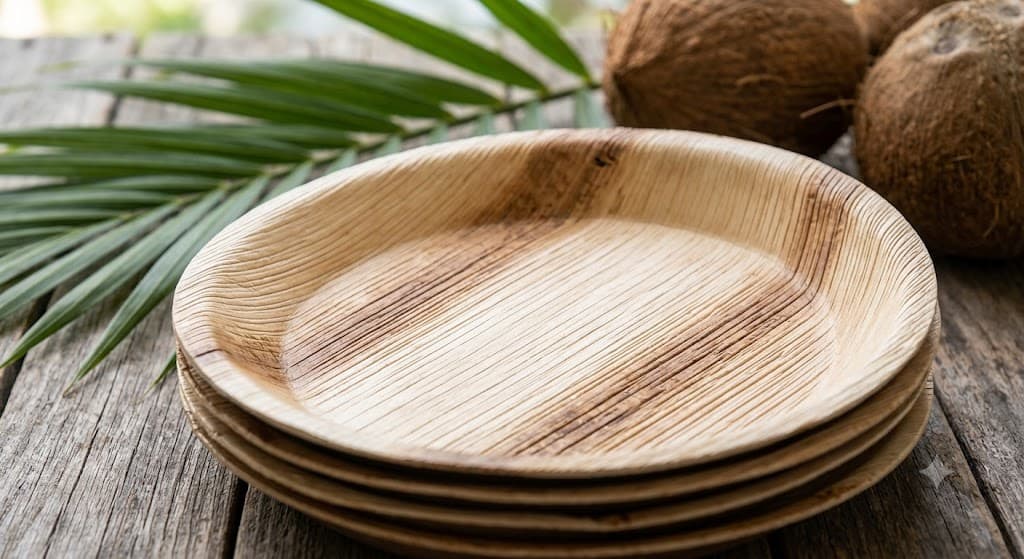
Palm leaf plates — also known as areca palm plates — are made from the naturally shed sheaths of the areca palm tree (Areca catechu). Crucially, no trees are cut down in the production. The broad leaves fall naturally from the tree, are collected by hand, cleaned with water, and heat-pressed into shape. No chemicals, dyes, waxes, or adhesives are used at any stage of production.
The result is a plate that carries the natural grain, texture, and earthy warmth of the palm leaf itself. Every plate is slightly unique — a quality that gives handcrafted eco-friendly tableware a character that no plastic or paper plate can replicate.
From Fallen Leaf to Dining Table: How They're Made
The manufacturing process for palm leaf plates is remarkably simple — and that simplicity is part of what makes them so sustainable.
- Collection: Naturally fallen areca palm leaf sheaths are gathered from farms, typically in tropical South India, Sri Lanka, and Southeast Asia.
- Cleaning: Each leaf is washed thoroughly with water to remove dirt and natural residue.
- Heat pressing: The cleaned leaf is placed into a mould and pressed under heat and pressure to form the desired plate shape — round, square, or rectangular.
- Trimming & quality check: Edges are smoothed, and each plate is inspected before packaging.
The entire process is low-energy, water-conserving, and produces near-zero waste. Offcuts and rejected pieces return to the earth as compost.
Why Palm Leaf Plates Are Genuinely Compostable
The term 'compostable' is frequently misused in eco-friendly marketing. Many products labelled compostable require high-temperature industrial composting facilities to break down — and will persist in a home compost bin for years.
Palm leaf plates are different. Because they are made from a single natural material with no coatings or binders, they biodegrade in a home compost environment, typically within 60 to 90 days. Some certifications, such as the CMA (Composting Manufacturing Alliance) certification, formally verify this rapid home composting performance — a meaningful distinction for eco-conscious buyers.
In contrast to PLA bioplastic plates, which require specific industrial composting infrastructure to break down, or paper plates coated with plastic films, palm leaf plates return to soil naturally and safely.
Strength, Style, and Versatility
One of the most common misconceptions about eco-friendly tableware is that sustainable necessarily means flimsy. Palm leaf plates challenge that assumption directly. Areca palm leaf plates are naturally sturdy and heat-resistant, making them suitable for hot foods, sauces, and dishes that would cause paper plates to collapse. They are microwave-safe and can typically withstand temperatures above 100°C.
Aesthetically, palm leaf plates bring a warmth and elegance to any table setting. They are a popular choice for weddings, outdoor events, corporate catering, upscale food markets, and even everyday home dining — precisely because they look beautiful rather than disposable.
The Growing Market for Sustainable Tableware
The global market for compostable tableware is expanding rapidly. Industry data projects the sector will surpass $4 billion by 2026, driven by tightening plastic regulations across Europe, North America, and Asia-Pacific, as well as growing consumer demand for sustainable alternatives. Palm leaf tableware is seeing consistent demand growth in weddings, fine dining, and sustainable gifting markets.
How to Choose Quality Palm Leaf Plates
- Third-party compostability certifications (CMA, OK Compost Home, or EN13432)
- Chemical-free manufacturing — no dyes, bleaches, waxes, or adhesives
- Ethical sourcing — products made in fair-trade conditions, supporting rural farming communities
- Clear labelling about home vs. industrial composting requirements
The Takeaway
Palm leaf plates represent one of the most elegant solutions in sustainable tableware: a product that is genuinely beautiful, functionally superior to paper alternatives, and truly zero-waste from production to disposal. As plastic regulations tighten and consumer awareness grows, areca palm plates are not a niche novelty — they are the future of disposable dinnerware.